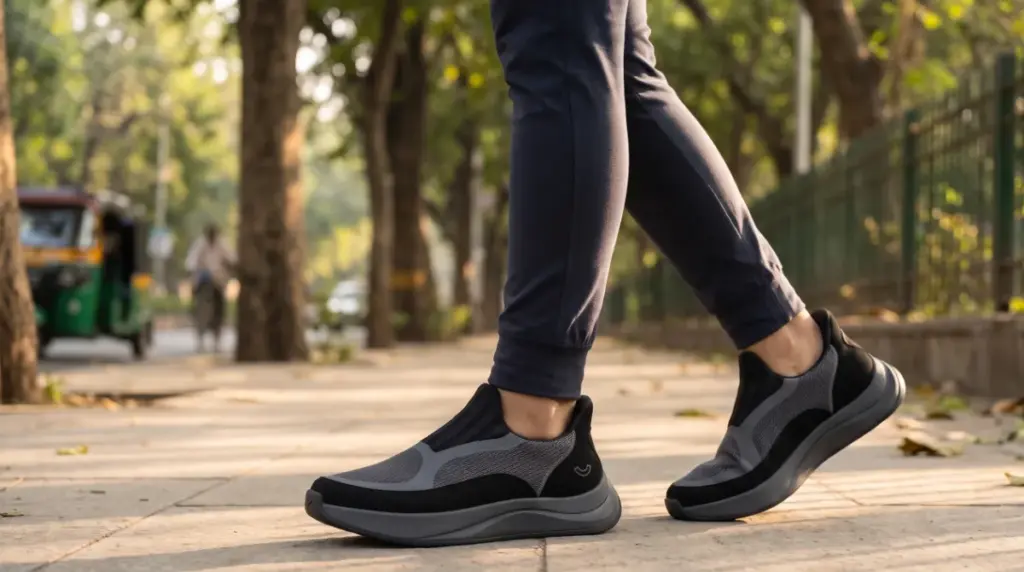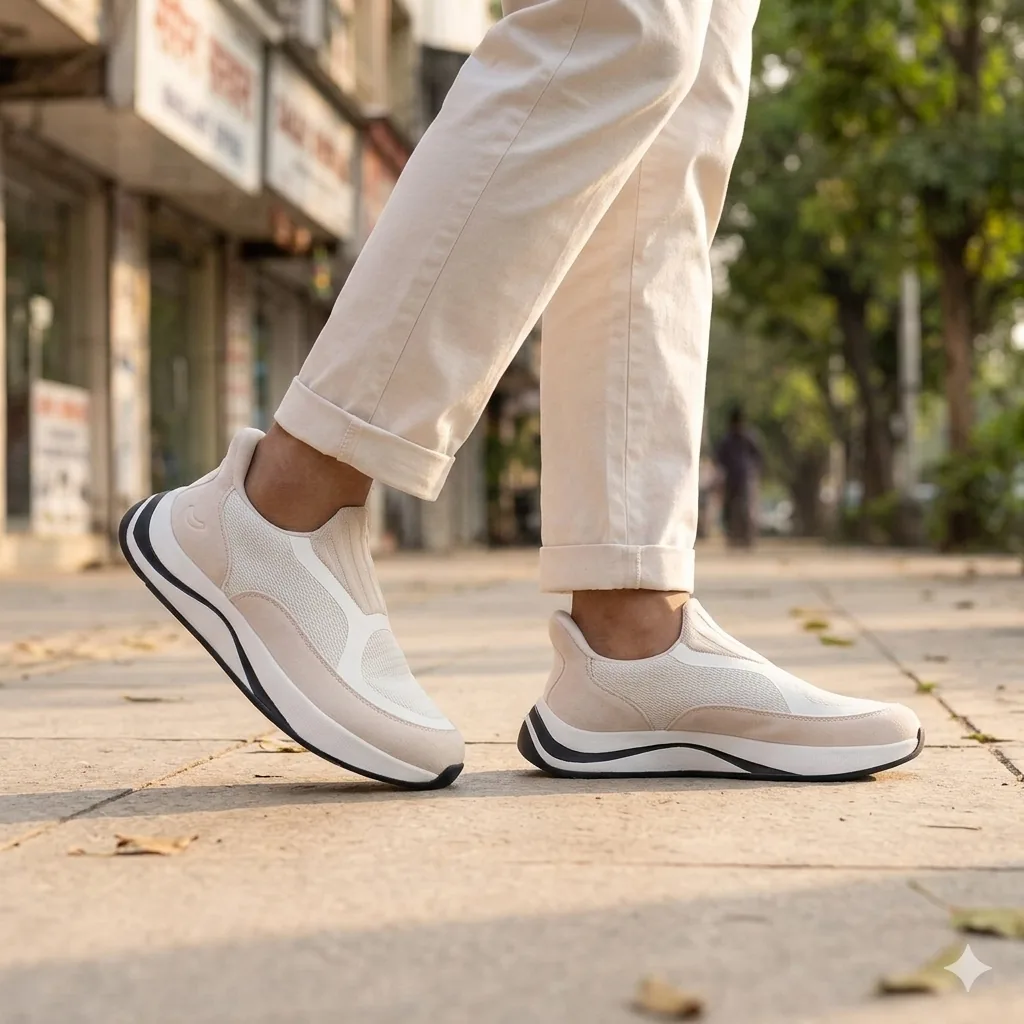

The best running shoes for flat feet have a firm arch that does not squash flat under your thumb, a stiff heel counter, a wide base and room at the toes. Soft foam alone is not enough. If you overpronate, pick a stability shoe. If your roll is mild, a cushioned shoe with built-in arch support works.
Running with flat feet is common, and most runners with low arches run without pain. Picking the best running shoes for flat feet is where people get stuck. The wrong pair can lead to arch ache, shin pain and shoes that sag inward within months.
The good news is that choosing running shoes for flat feet follows a simple sequence. Check your arch, know your pronation, test the arch support, inspect the heel and base, get the fit right, pick the category and add insoles if needed. Each step below builds on the last, so you buy once and stand on firm ground.
Shoes With Arch Support


Step 1: Check Your Arch Type
Your arch is the curve on the inside of your foot between the heel and the ball. Knowing how high or low it sits is the first step, because it decides how much support your shoe has to give.
Try the wet test:
- Wet the sole of your foot and step onto a sheet of brown paper.
- Step off and look at the print.
- A full print with almost no inward curve means a flat or low arch.
- A print with a clear curve means a medium or high arch.
Do the test on both feet, since many people have one flatter foot. Low arches are not a problem in themselves. They only change what you look for in a shoe. For a deeper look, our guide to types of foot shapes and their compatible shoes breaks down each type.
Step 2: Know Your Pronation Type
Pronation is the natural inward roll of your foot when it lands. Flat feet often roll in more than average, and that extra roll is what the shoe has to manage.
Check the soles of an old pair:
- Wear on the inner edge and under the big toe: overpronation. You need a stability shoe.
- Even wear across the sole: neutral. A cushioned shoe with arch support works.
- Wear on the outer edge: underpronation. You need soft, flexible cushioning.
Flat feet do not always mean overpronation. Many flat-footed runners have a neutral roll. If your old shoes show heavy inner wear and your knees or shins ache after runs, ask a physio or a running store for a gait check before you spend money.
Step 3: Test the Arch Support
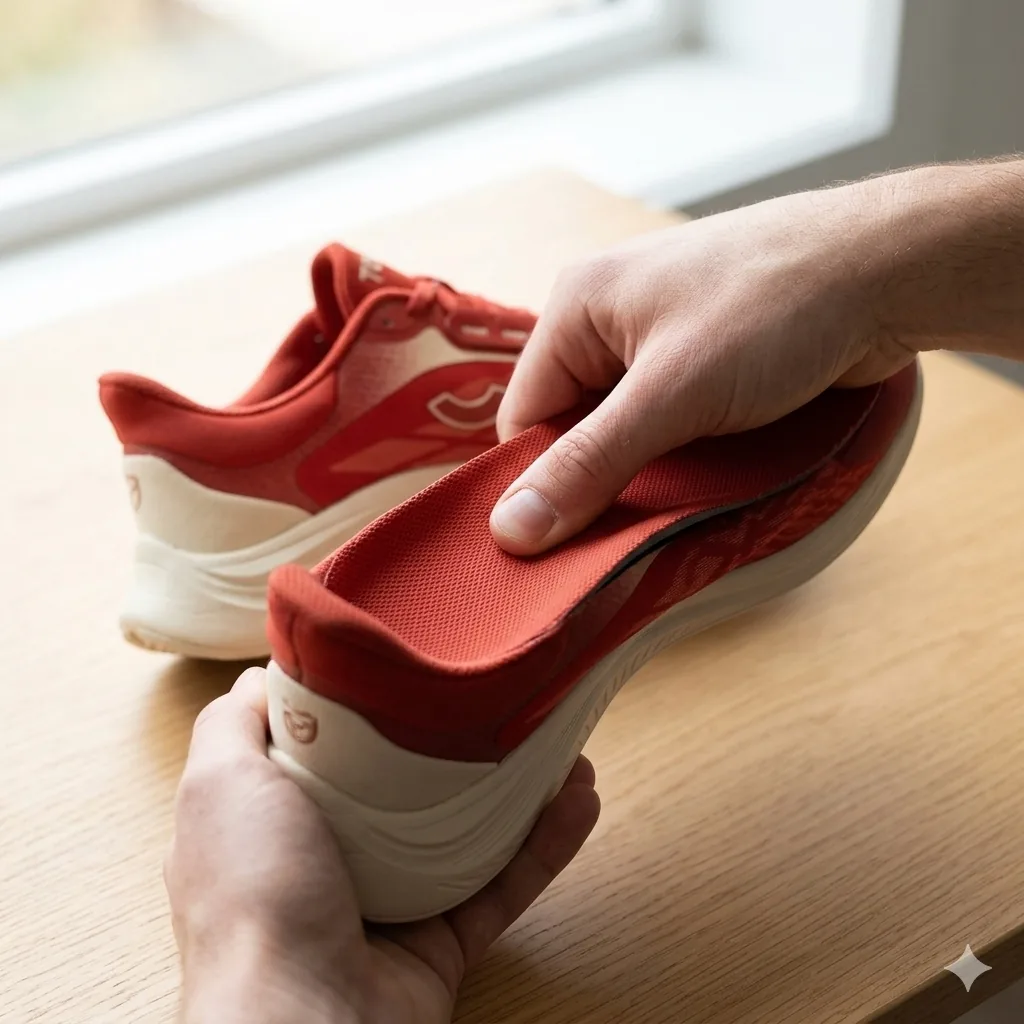
Arch support is the raised, firm section of the insole and midsole under your arch. It matters because a soft arch flattens within months and leaves your foot unsupported again.
Do these checks in the store:
- Thumb press: press the arch area of the insole hard. If it squashes flat, it will be flat on your foot soon.
- Dual-density foam: look for a firmer foam on the inner side. It resists the inward roll better than one soft layer.
- Removable insole: pick a shoe whose insole comes out, so you can swap it later.
Memory foam feels plush in the store but often collapses under the arch with daily use. Firm and supportive beats soft and squishy for flat feet. Our guide to the science behind arch support insoles explains how a good insole holds its shape.
Step 4: Inspect the Heel and Base
The heel counter is the stiff cup around the back of your heel, and the base is the width of the sole under your foot. Together they stop the foot from tipping inward on landing.
Follow these checks:
- Pinch test: squeeze the back of the heel. It should resist, not fold flat.
- Twist test: hold the shoe at both ends and wring it like a towel. A shoe for flat feet should resist the twist.
- Look underneath: a wider midsole under the arch gives a steadier platform.
If a shoe passes the thumb press but fails the twist test, it will feel fine for a week and then let your foot roll. All three checks together give you a reliable answer in under a minute.
Step 5: Get the Fit Right for Indian Feet
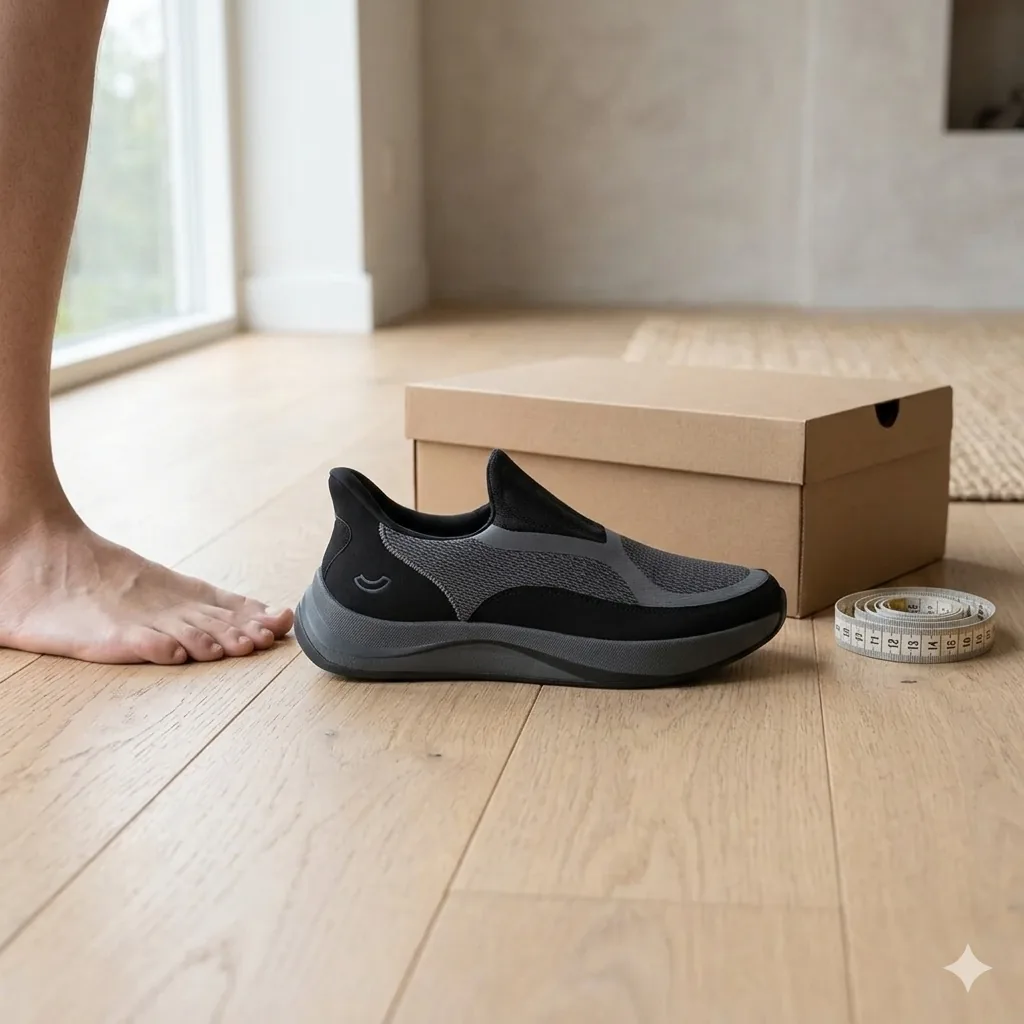
Fit is how the shoe holds your heel and how much room it leaves your toes. A good arch in the wrong fit still hurts, so this step matters as much as support.
Follow these fit rules:
- Shop in the evening, when your feet are at their largest.
- Leave about a thumb’s width between your longest toe and the front of the shoe.
- The heel should feel locked with no slipping when you walk.
- Your toes should spread without pressing the sides.
Indian feet are often wider across the forefoot than standard sizing allows, so many runners go a size up and end up with a loose heel. A wide toe box is the better fix. Our guide to why wide toe box shoes matter for Indian feet explains how width changes comfort.
Step 6: Pick the Right Shoe Category
Running shoes fall into neutral cushioned, stability and motion control. Matching the category to your pronation from Step 2 is what makes the support actually work.
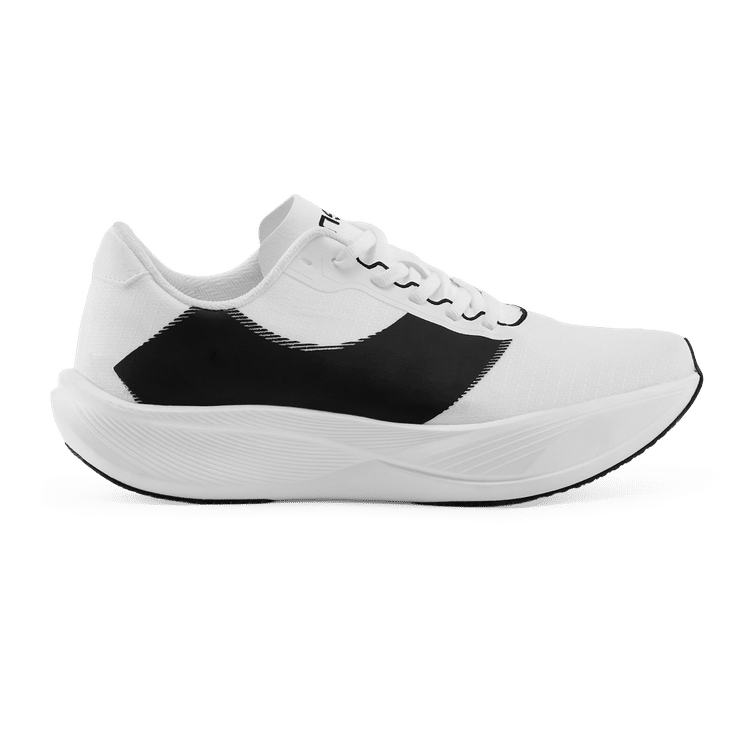
The Aeonic Recovery Trainer is built for flat-footed runners with a neutral or mild roll who want arch support on easy runs. The Aeonic Recovery Trainer uses dual-density insoles with advanced arch support and room for wide feet with a flared toe box. A max-cushion midsole with a 34 mm heel stack and a 10 mm heel-to-toe drop adds cushioning on short runs and recovery days.
If your old shoes show heavy inner wear, a dedicated stability shoe is the safer first pick, and you can keep a cushioned trainer for easy days.
Step 7: Know When to Add Insoles
An insole is the removable footbed inside the shoe. Adding a supportive one is the simplest way to extend a shoe’s life when the built-in arch starts to sag. Not sure you need extra support at all? Our guide on how to tell if you need arch support walks you through it.
Watch for these signs:
- The arch area feels flat after a few months of use.
- You get arch or heel soreness after longer runs.
- The shoe still has good outsole grip but feels dead underfoot.
Replace the insole first, since it often wears out before the outsole. Replace the whole shoe every 500 to 800 km (about 300 to 500 miles). Our guide to how long running shoes last explains how to spot a worn-out pair.
Gear Up for Your Next Run



Neutral vs Stability vs Motion Control: Quick Comparison
A short reference to match your foot to the right shoe type.
| Type | Best For | Key Feature |
|---|---|---|
| Neutral cushioned | Flat feet with a neutral or mild roll | Soft midsole with built-in arch support |
| Stability | Mild to moderate overpronation | Firmer inner foam that limits the inward roll |
| Motion control | Severe overpronation or rigid flat feet | Stiff, wide base that restricts foot movement |
The key point is to match the shoe to how your foot moves, not to buy the softest shoe in the store. Check your arch and roll first, then test support, heel and fit before you pay.
Run on Firm Ground
Flat feet do not have to slow you down. The right support keeps each stride steady and your arches comfortable from the first kilometre to the last.
Ready to feel the difference for yourself? Check our running shoes and find a pair with arch support built for how your feet actually move. Never Stop Playing. Start here.
Frequently Asked Questions
Which shoes are best for flat feet?
Shoes with firm arch support, a stiff heel counter and a wide base are best for flat feet. The arch should not squash flat when you press it with your thumb. Runners who overpronate should pick a stability shoe, while a mild roll suits a cushioned shoe with built-in arch support.
Can I run in neutral shoes if I have flat feet?
Yes, you can run in neutral shoes if your flat feet have a neutral or mild roll. Check the wear on an old pair first. Heavy wear on the inner edge points to overpronation, and in that case a stability shoe gives better support over longer distances.
Are memory foam shoes good for flat feet?
Memory foam shoes are usually not the best choice for flat feet. The foam feels soft in the store but tends to collapse under the arch with daily use. Firm, dual-density foam holds its shape longer and keeps supporting the arch for months.
Are barefoot shoes good for flat feet?
Barefoot shoes are not a safe first choice for most runners with flat feet. They offer almost no arch support or cushioning, so the foot has to do all the work. If you want to try them, start with short walks and build up slowly over several weeks.
How do I choose running shoes for flat feet?
To choose running shoes for flat feet, check your arch with the wet test and your pronation from old shoe wear. Then press the arch, pinch the heel and twist the shoe in the store. Finish with a fit check that leaves a thumb’s width at the toes.
How often should I replace running shoes for flat feet?
Replace running shoes for flat feet every 500 to 800 km, or sooner if the arch feels flat. Flat-footed runners often wear out the arch support before the outsole. Swapping the insole first can extend the life of a shoe that still grips well.