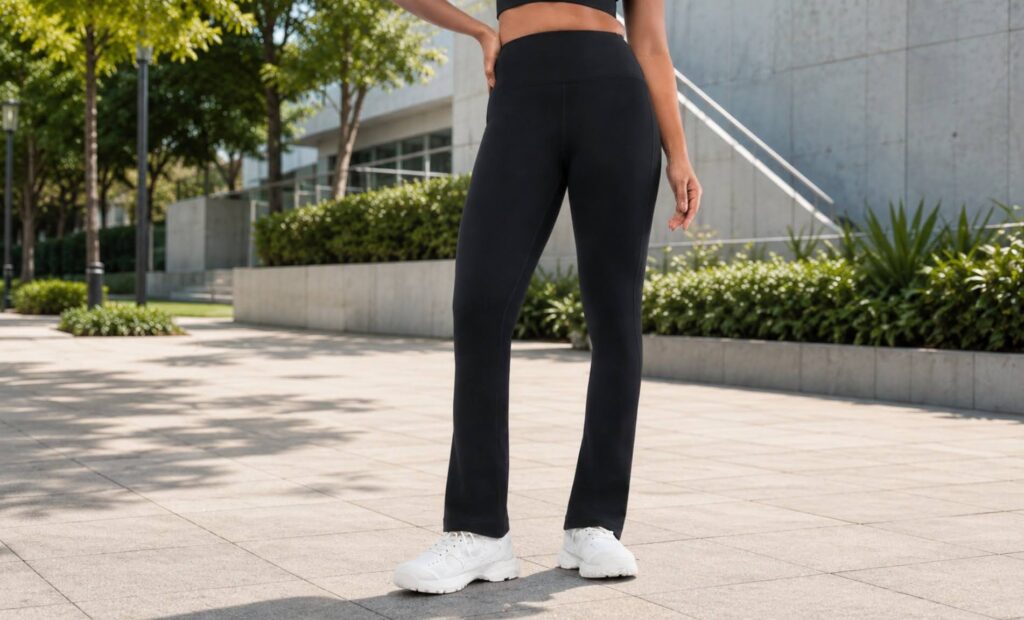
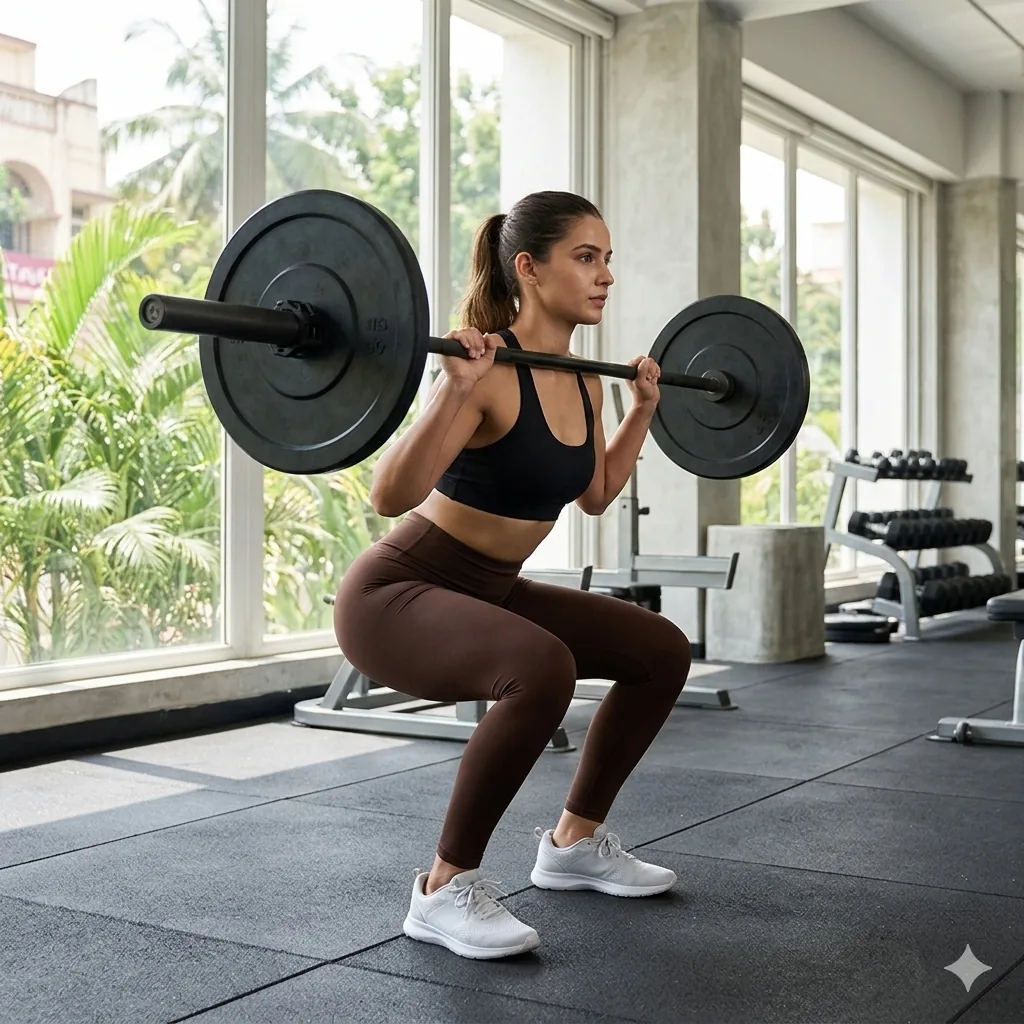
To check if gym leggings are squat-proof, stretch the fabric over your palm under bright light, then squat in daylight with your back to a window and check a phone photo. If you can see skin or the colour of your underwear, they will show through at the gym. Dense, tightly knitted fabric passes.
Buying gym leggings online is easy. Finding gym leggings for women that stay opaque, stay up and stay smooth is where most people get stuck. The wrong pair turns see-through in a squat, rolls down mid-set or starts pilling after a few washes.
The good news is that checking leggings follows a simple sequence. Do the squat test, check the fabric, test the waistband, look for pilling, pick your compression, get the size right and wash them properly. Each step below builds on the last, so your next pair works as hard as you do.
Squat-Proof Leggings


Step 1: Do the Squat Test
The squat test checks whether the fabric stays opaque when it is stretched to its limit. It matters because a deep squat stretches leggings more than any other move in the gym.
Try the test at home:
- Stand with your back to a bright window in daylight.
- Squat as deep as you would with weights.
- Ask someone to look, or take a phone photo from behind.
- Check for skin, underwear colour or a shine where the fabric thins.
Changing-room lights are soft and hide sheerness, so always do this test at home in daylight before you remove the tags. If a pair fails, return it. No amount of washing will make thin fabric thicker.
Step 2: Check the Fabric
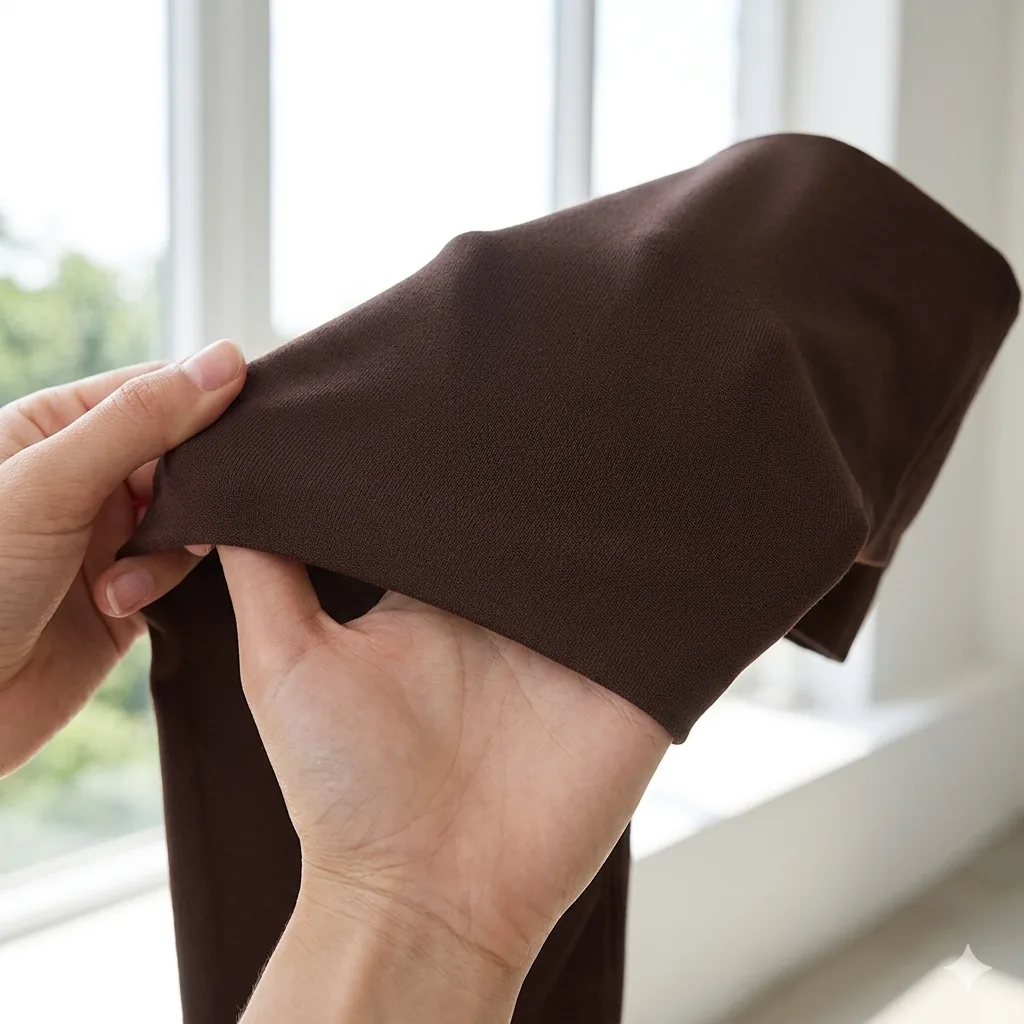
Fabric weight and knit decide how much light passes through and how the leggings hold their shape. Thin, loosely knitted fabric stretches open in a squat.
Do the palm test:
- Stretch a section of fabric over your open palm. If you can see your skin clearly, so will everyone else.
- Feel the thickness. Good gym leggings feel dense, not papery.
- Check the label. Nylon and spandex blends usually feel smoother and recover better than thin polyester.
Darker colours hide a little sheerness, but they do not fix thin fabric. Our guide to why premium sportswear relies on nylon explains how fibre choice changes feel and durability.
Step 3: Test the Waistband
The waistband is the top band that holds the leggings in place. A weak one slides down every time you bend, so you end up adjusting between every set.
Try these checks:
- Do 10 jumping jacks in the trial room. If the waistband slips, it will slip at the gym.
- Bend forward and touch your toes. The band should stay flat, not fold over.
- Look for a broad, high-rise band, which spreads pressure and stays put.
A waistband that rolls down is the most common complaint about gym leggings. A wide band that sits at or above the navel is the safe default for squats, deadlifts and lunges.
Step 4: Look for Pilling
Pilling is the small fuzz balls that form where fabric rubs, usually on the inner thighs. It makes leggings look old after a handful of washes.
Watch for these signs:
- The inner thigh feels fuzzy after you rub it with your hand for 20 seconds.
- The fabric has a brushed, very soft surface that sheds lint.
- Seams are thick and rough where the legs meet.
Smooth, tightly knitted fabric pills less. Flat or repositioned seams reduce rubbing too. If a new pair already feels fuzzy in the store, expect it to pill quickly.
Step 5: Pick Your Compression Level
Compression is how firmly the leggings hug your legs. Higher compression gives more support and a smoother fit, while lower compression feels relaxed for light training.
The Sculptex High Impact Leggings are built for heavy training days. The Sculptex High Impact Leggings use high compression for support while lifting heavy weights. A waistband designed not to fold or roll down keeps them in place through squats and deadlifts.
For regular gym days, medium compression is enough. Save high compression for heavy lifting, HIIT and long sessions.
Step 6: Get the Size Right
Size is how the leggings fit your waist, hips and leg length. The wrong size causes most squat-proof failures, because a pair that is too small stretches the fabric thin.
Follow these fit rules:
- Use the brand’s size chart with your waist and hip measurements, not your jeans size.
- If you are between sizes, go up for opacity, not down for a tighter look.
- Check the length. Leggings that bunch at the ankle or end mid-calf by accident are the wrong length.
- Pick a tall fit if you are above average height, so the rise stays high.
A correctly sized pair looks smooth with no wrinkles at the knee and no sheen at the seat when you squat.
Step 7: Wash Them the Right Way
Washing is where most leggings lose their stretch, colour and opacity. The right routine adds months to every pair.
Follow these washing rules:
- Turn them inside out and wash in cold water.
- Use a liquid detergent and skip fabric softener.
- Air dry in shade, never in direct sun or a dryer.
Fabric softener coats the fibres, traps sweat smell and weakens stretch. Heat breaks down spandex, which is what makes leggings sag and go thin over time. Our guide to why workout clothes still smell after washing covers the rest.
Complete Your Gym Kit


Low vs Medium vs High Compression: Quick Comparison
A short reference to match your workout to the right leggings.
| Type | Best For | Key Feature |
|---|---|---|
| Low compression | Yoga, stretching and lounging | Soft, relaxed fit |
| Medium compression | Regular gym workouts | Balanced support and comfort |
| High compression | Heavy lifting and HIIT | Firm, sculpted hold that stays put |
The key point is to test opacity and waistband hold at home, not to trust how the leggings look on a hanger. Run the squat and palm tests, then check pilling, compression and size.
Squat With Confidence
Good leggings disappear once you start training. The right pair lets you focus on the lift, not on what is showing or slipping.
Ready to feel the difference for yourself? Check our gym leggings and find a pair with the support and hold your workouts need. Never Stop Playing. Start here.
Frequently Asked Questions
How do I know if leggings are squat-proof?
You can tell leggings are squat-proof if no skin or underwear colour shows when you squat deeply in daylight. Stand with your back to a window, squat and check a phone photo from behind. Also stretch the fabric over your palm. If you see your skin, they are not squat-proof.
Why do my leggings become see-through?
Leggings become see-through when thin or loosely knitted fabric stretches beyond its limit, often because the size is too small. Heat, fabric softener and age also break down the stretch fibres. A denser fabric in the correct size stays opaque for longer.
How do I stop my leggings from rolling down?
To stop leggings rolling down, choose a pair with a broad, high-rise waistband that sits at or above the navel. Check the size against your waist measurement, since a loose band slips. Test with jumping jacks and a forward bend before you remove the tags.
What is the difference between medium and high compression leggings?
The difference is how firmly they hold your legs. Medium compression leggings balance support and comfort for regular gym workouts. High compression leggings give a firmer, sculpted hold that stays in place during heavy lifting and HIIT, but feel tighter for long, easy sessions.
How do I stop leggings from pilling?
To stop leggings pilling, wash them inside out in cold water with liquid detergent and skip fabric softener. Air dry them in shade instead of using a dryer. Choosing smooth, tightly knitted fabric with flat seams at the inner thigh also reduces pilling from the start.
Should gym leggings be tight or loose?
Gym leggings should feel snug but not so tight that the fabric thins out. A good fit is smooth at the knee and seat with no wrinkles and no sheen when you squat. If you are between sizes, go up a size for better opacity.