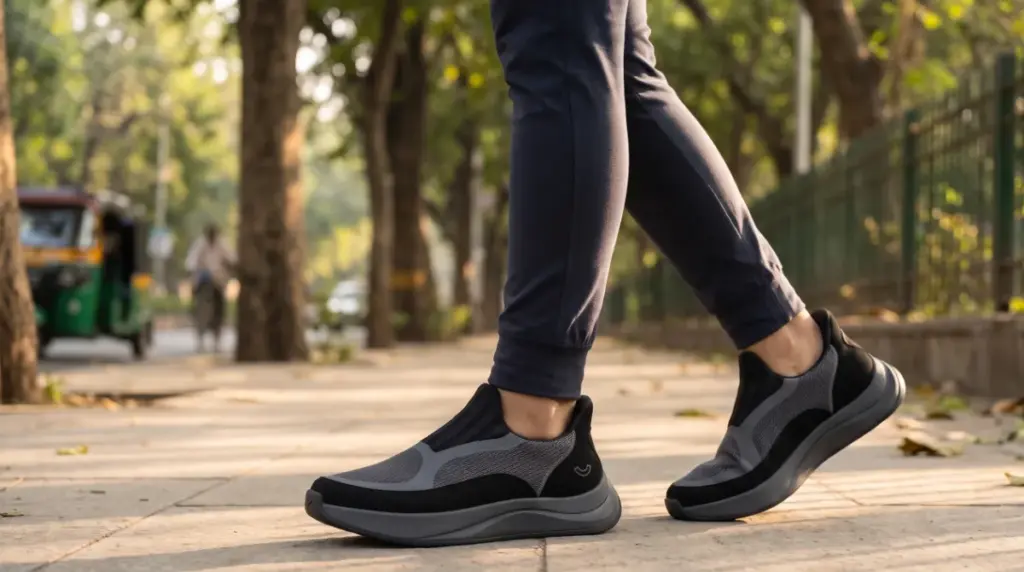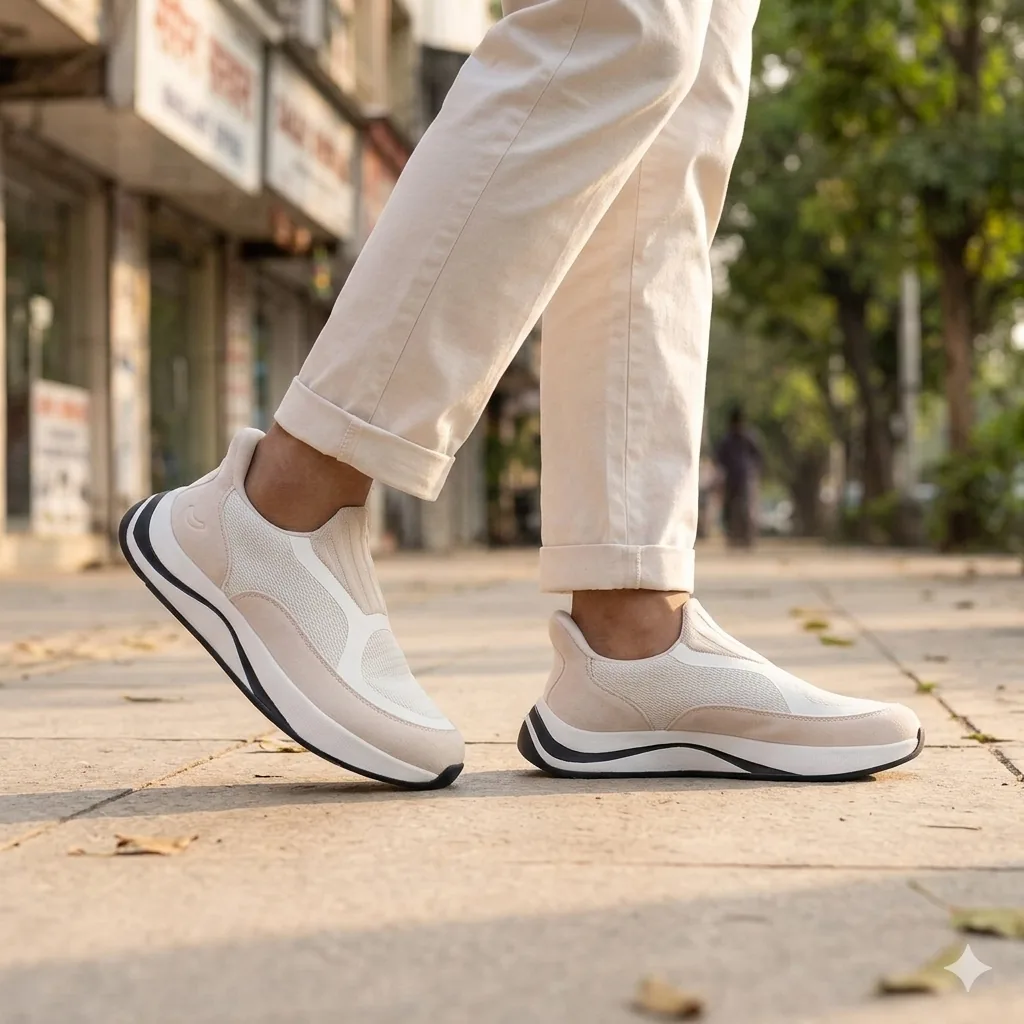
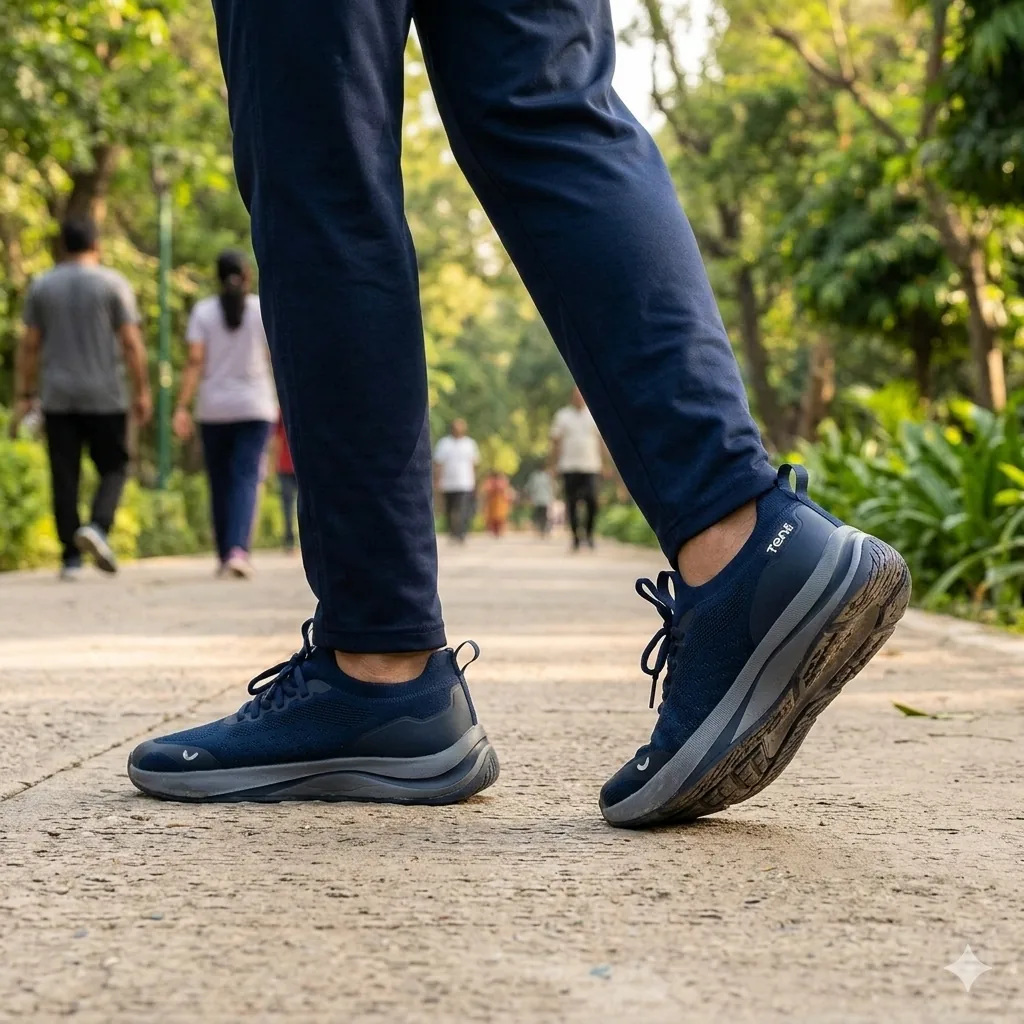
The best walking shoes for 10,000 steps a day are light, ideally under 300 g per shoe, with a cushioned heel, firm arch support, a roomy toe box and a rubber outsole that grips rough roads. Replace them every 600 to 800 km, which is about 3 to 4 months if one pair covers all 10,000 steps every day.
Walking 10,000 steps a day is one of the easiest habits to start. Choosing walking shoes for it is where most people get stuck. The wrong pair can bring heel pain, sore arches and blisters within the first few weeks.
The good news is that picking walking shoes follows a simple sequence. Know your surface, check the cushioning, weigh the shoe, test the arch and heel, get the fit right, check the grip and plan when to replace them. Each step below builds on the last, so every step of your 10,000 counts for the right reasons.
Walking Shoes for Long Days


Step 1: Know Your Walking Surface
Your walking surface is the ground you cover most of your steps on. It matters because concrete, tar and park tracks put very different loads on your feet.
A simple split:
- Concrete and tar roads: hard and unforgiving. You need more heel cushioning and a thicker outsole.
- Park tracks and paver blocks: softer but uneven. You need grip and a stable base.
- Office floors and malls: smooth and flat. Light cushioning and comfort matter most.
Most Indian city walkers spend their steps on concrete, broken footpaths and paver blocks. Plan for the hardest surface you walk on every day, not the nicest one.
Step 2: Check the Cushioning
Cushioning is the foam in the midsole that absorbs impact each time your heel lands. At 10,000 steps, each foot lands about 5,000 times a day, so small differences add up.
Do the press test:
- Press the heel area with your thumb. It should give a little and spring back.
- Press the forefoot. It should bend easily at the toes but not in the middle.
- Look for an EVA or PU foam midsole, which balances softness and bounce.
Too soft is a common mistake. Very squishy shoes feel great in the store but let the foot sink and roll by evening. Medium cushioning with a firm base is the safe default. Our guide to types of shoe soles and why they matter explains each foam.
Step 3: Weigh the Shoe
Shoe weight is how heavy each shoe is on your foot. Over 10,000 steps, every extra 100 g is lifted thousands of times, which is why light shoes feel easier by the end of the day.
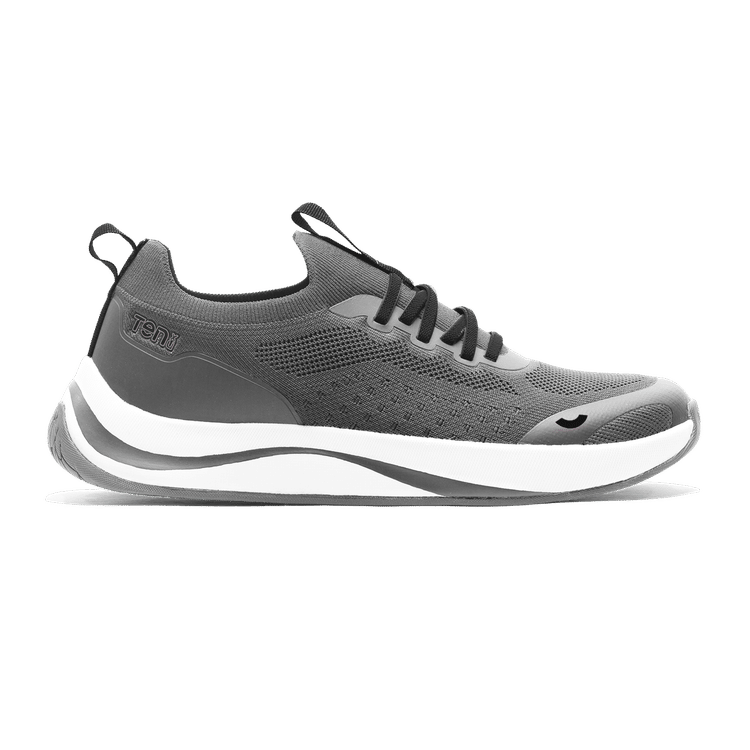
The Crossover Knit is built for this all-day walking need. The Crossover Knit weighs around 280 g with a flyknit upper that is soft and breathable from day one. An EVA midsole and a 3.5 mm rubber outsole keep it light underfoot with dependable grip.
As a rule, aim for under 300 g per shoe for daily walks. Heavier shoes are fine for short walks but tire the legs over long days.
Step 4: Test the Arch and Heel
Arch support is the firm section under the inside of your foot, and the heel counter is the stiff cup around the back of your heel. Together they keep your foot steady on hard roads.
Follow these checks:
- Thumb press: push into the arch of the insole. It should resist, not squash flat.
- Pinch test: squeeze the back of the heel. It should hold its shape.
- Twist test: wring the shoe gently. It should resist twisting in the middle.
A firm heel and arch matter even more if your heel hurts in the first steps of the morning. If that pain is sharp or lasts more than a few weeks, see a doctor or physio before you change shoes. Our guide to the science behind arch support insoles explains how support holds up over time.
Step 5: Get the Fit Right
Fit is how well the shoe holds your heel and how much room it leaves your toes. Feet swell over a long day of walking, so a shoe that fits at 9 am can pinch by 6 pm.
Follow these fit rules:
- Try shoes in the evening, when your feet are largest.
- Leave about a thumb’s width between your longest toe and the front.
- Your heel should not lift as you walk.
- Your toes should spread without touching the sides.
Indian feet are often wider across the forefoot than standard sizing allows, so many walkers end up with pinched little toes. A wide toe box solves this without going a size up. Our guide to why wide toe box shoes matter for Indian feet explains why.
Step 6: Check the Outsole Grip
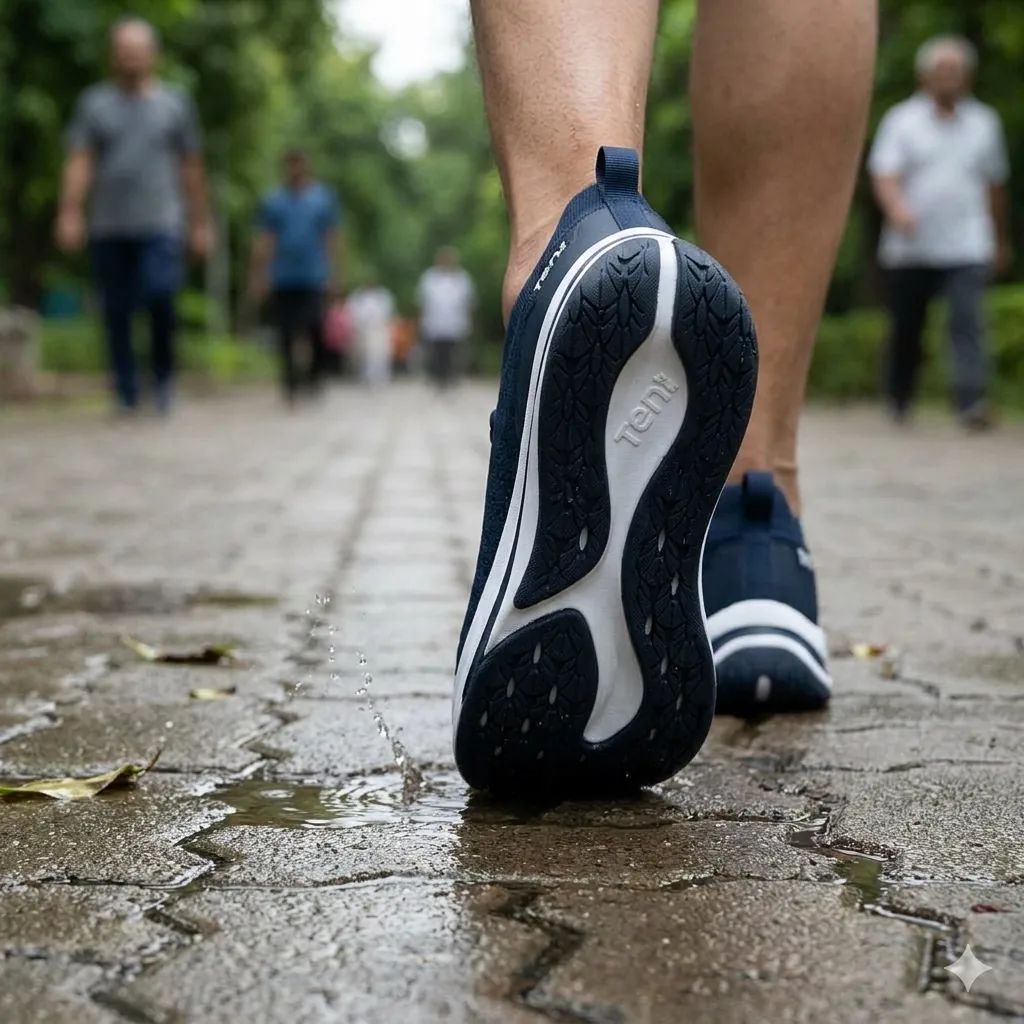
The outsole is the rubber layer that touches the ground. On Indian roads it has to handle dust, wet patches in the monsoon and broken footpaths.
Watch for these signs of a good outsole:
- Rubber, not plain foam, under the heel and forefoot.
- A tread pattern with grooves, not a smooth flat sole.
- A slight upward curve at the toe for a smooth roll-off.
Smooth foam soles wear down quickly on tar and slip on wet tiles. A rubber outsole with visible grooves lasts longer and keeps you steady in the rain.
Step 7: Know When to Replace Them
Every walking shoe wears out, even if the upper still looks fine. Knowing when to replace yours keeps the cushioning and support doing their job.
Watch for these signs:
- The heel feels hard or flat when you land.
- The tread is worn smooth under the heel or ball of the foot.
- You start getting aches that you did not have before.
A common rule is to replace walking shoes every 600 to 800 km (about 370 to 500 miles). 10,000 steps is about 7 to 8 km, so one pair worn every day lasts roughly 3 to 4 months. Rotating two pairs spreads the wear and lets the foam recover between days.
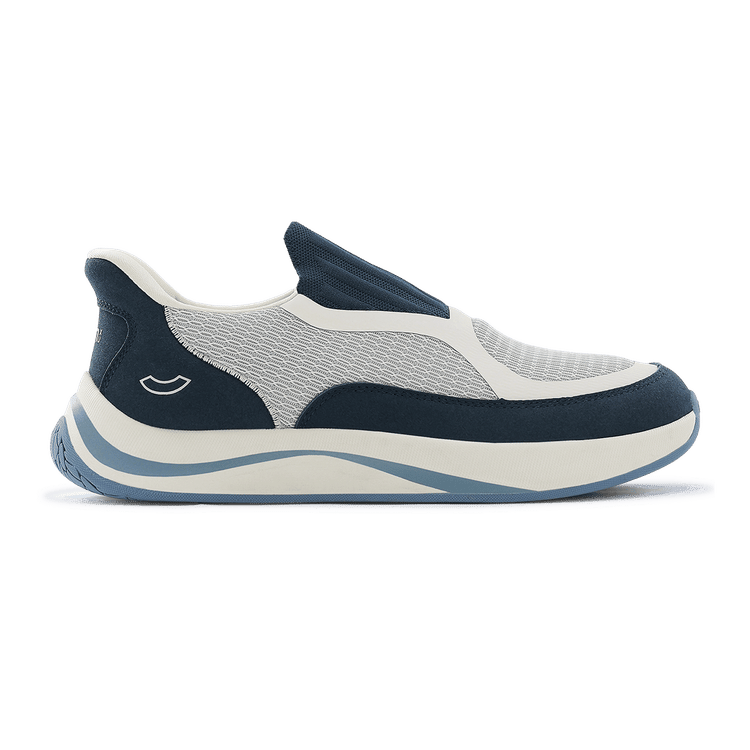
Slip-On Walking Shoes


Walking vs Running vs Casual Sneakers: Quick Comparison
A short reference to match your daily steps to the right shoe.
| Type | Best For | Key Feature |
|---|---|---|
| Walking shoes | Daily walks and all-day steps | Cushioned heel and stable, flexible sole |
| Running shoes | Runs and brisk walks | Higher cushioning and a more responsive midsole |
| Casual sneakers | Short walks and outings | Style first, lighter cushioning |
The key point is to buy for how far and where you walk, not for how the shoe looks. Know your surface, then check cushioning, weight, support, fit and grip. Our guide to the difference between running and walking shoes goes deeper.
Make Every Step Count
Daily walking is only good for you if your feet keep up. The right pair turns 10,000 steps from a chore into the easiest part of your day.
Ready to feel the difference for yourself? Check our walking shoes and find a light, cushioned pair built for Indian roads. Never Stop Playing. Start here.
Frequently Asked Questions
Which shoes are best for walking 10,000 steps a day?
The best shoes for 10,000 steps a day are light walking shoes with a cushioned heel, firm arch support and a rubber outsole. Aim for under 300 g per shoe and a roomy toe box. Try them in the evening, when your feet are largest, to get the fit right.
Can running shoes be used for walking?
Yes, running shoes can be used for walking, and many people walk in them every day. They usually have more cushioning than you need for walking. Pick one with a stable heel and a sole that is not too soft, so your foot does not roll on long walks.
What is the difference between walking and running shoes?
The main difference is that running shoes have more cushioning and a more responsive midsole for higher impact. Walking shoes have a flatter, more stable sole and a flexible forefoot for a heel-to-toe roll. Walking shoes are usually lighter in cushioning and firmer underfoot.
How often should I change walking shoes?
Change walking shoes every 600 to 800 km, which is about 3 to 4 months if one pair covers 10,000 steps every day. Replace them sooner if the heel feels flat, the tread is worn smooth or new aches appear. Rotating two pairs helps each pair last longer.
Are memory foam shoes good for walking?
Memory foam shoes feel comfortable at first but are not always the best choice for long daily walks. The foam can pack down and lose support over weeks of use. EVA or PU foam midsoles with a firm arch hold their shape better for 10,000 steps a day.
Is walking 10,000 steps a day enough to need special shoes?
Yes, walking 10,000 steps a day is enough to benefit from proper walking shoes. Each foot lands about 5,000 times a day, often on hard concrete. A light shoe with heel cushioning and arch support reduces fatigue and helps prevent sore feet.