Your arch shape decides how your foot handles every step. Flat feet and high arches sit at opposite ends, and each needs a different kind of shoe. Wearing the wrong type can leave your feet, knees, and back sore by the end of the day.
The good news is that matching shoes to your arch is straightforward once you know your type. The sections below explain how to identify flat feet and high arches. You will also learn the features each needs and how to pick a supportive pair that fits.
How to Identify Your Arch Type
Your arch type is the height of the curve along the inside of your foot. Knowing it is the first step, because flat feet and high arches need opposite features. A quick home test makes it clear.
Try the wet footprint test:
- Wet the sole of one foot.
- Step onto a piece of paper or a dry floor.
- Look at the shape of the print left behind.
A full footprint with little to no curve points to flat feet. A print showing only the heel, the ball, and a thin band between them points to high arches. A moderate curve in the middle points to a neutral arch. For a deeper look at foot anatomy, our guide to foot shapes and their compatible shoes covers arch height and toe shape together.
Gear Up For Your Next Run


Best Shoes for Flat Feet

Flat feet have a low or collapsed arch, so the entire sole touches the ground. The foot tends to roll inward, known as overpronation, which adds stress to the ankles, knees, and lower back. The right shoe guides the foot back toward a neutral position.
What to Look For
Flat feet need structure and support more than soft cushioning. The shoe should hold the foot steady and limit the inward roll.
Key features for flat feet:
- Stability or motion-control build that limits overpronation.
- A firm midsole that resists collapsing inward.
- Strong arch support to fill the low arch.
- A structured heel counter and a wide, stable base.
Shoe Picks for Flat Feet
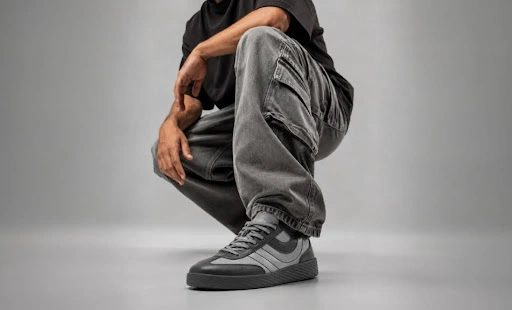
A stable sneaker with built-in arch support suits flat feet best. The Switch OG 2.0 Multi-Sport Sneaker includes inbuilt arch support and a 70mm collar that wraps the ankle. The added height helps keep flat feet aligned, while the wide Indian foot design gives the forefoot a stable base.
For everyday walking, a structured walking shoe works well. The Zenflo Walking Shoe uses INSITE dual-density insoles, with 8mm of Levation PU foam at the heel tapering to 4mm at the forefoot. The build gives steady support without excess softness.
Best Shoes for High Arches

High arches have an elevated midfoot, so only the heel and ball of the foot touch the ground. The foot tends to roll outward, known as supination, and absorbs shock poorly. The right shoe adds cushioning to soak up impact the arch cannot.
What to Look For
High arches need cushioning and shock absorption more than rigid support. The shoe should be soft underfoot and flexible enough to move with the foot.
Key features for high arches:
- Generous cushioning in the midsole to absorb shock.
- A neutral, flexible build that does not over-correct.
- A soft footbed under the heel and forefoot.
- Room across the forefoot so the arch is not squeezed.
Shoe Picks for High Arches
A cushioned neutral trainer suits high arches best. The Aeonic Recovery Trainer uses INSITE Contoura insoles shaped from over 120,000 foot scans, plus a Levation PU base. The cushioning absorbs shock on daily wear, and the flared toe box gives the forefoot room to spread.
For more on how midsole materials change cushioning and support, our guide to the different types of shoe soles breaks down PU, EVA, and TPU.
Flat Feet vs High Arches: Quick Comparison
A short reference to match each arch type to the shoe it needs.
| Feature | Flat Feet | High Arches |
| Arch | Low or collapsed | Elevated |
| Common roll | Overpronation (inward) | Supination (outward) |
| Shoe type | Stability or motion-control | Cushioned neutral |
| Priority | Support and structure | Cushioning and shock absorption |
| Common concern | Plantar fasciitis | Ankle rolling, poor shock absorption |
The key point is to match the shoe to your arch. Flat feet want support that limits the inward roll, while high arches want cushioning that absorbs the shock the foot cannot.
A Note on Foot Pain
Footwear helps, but it is not a cure. If you have ongoing heel pain, arch soreness, or recurring foot injuries, see a podiatrist for a proper assessment. A professional can check your gait and recommend custom support if you need it.
Wider feet are common in India. A wide toe-box made for Indian feet gives the forefoot room to sit naturally, which helps comfort across both arch types.
Find the Pair That Fits Your Feet
Your feet carry you through every day. The right shoe meets them where they are, supporting a flat arch or cushioning a high one, so each step feels easier than the last.
Ready to feel the difference for yourself? Check our products and find a pair built around how your feet actually move. Never Stop Playing. Start here.
Frequently Asked Questions
Gear Up For Your Next Run