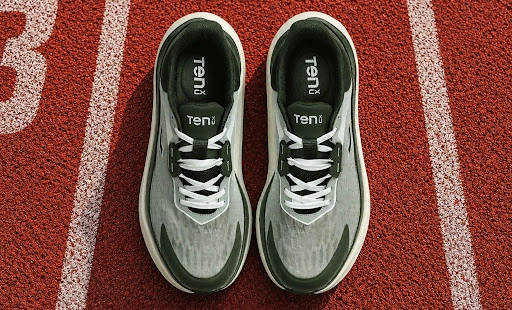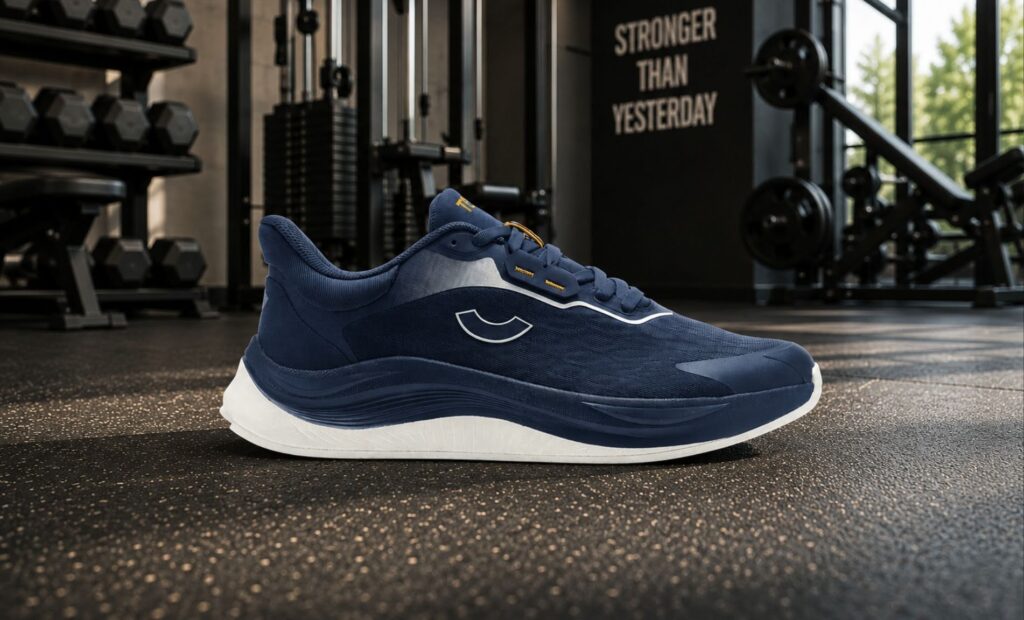
You tried on a pair of running shoes that felt like clouds in the store. Two months later, those clouds went flat, your knees started aching, and you’re back where you started.
Softness fades. Cushioning that actually protects your joints over hundreds of kilometres is built differently. A study published in Scientific Reports found that advanced cushioned running shoes reduced oxygen cost by 3% and lowered cumulative tibial loading per kilometre. The right shoe doesn’t just feel soft. Your bones genuinely absorb less force.
So what separates the best cushioned running shoes from the ones that quit on day 30? Here are eight things to check.
1: Midsole Foam That Doesn’t Flatten Out
The midsole is where cushioning lives. EVA (ethylene vinyl acetate) is the most common foam, lightweight and soft, with good shock absorption. But standard EVA compresses over time and loses its bounce.
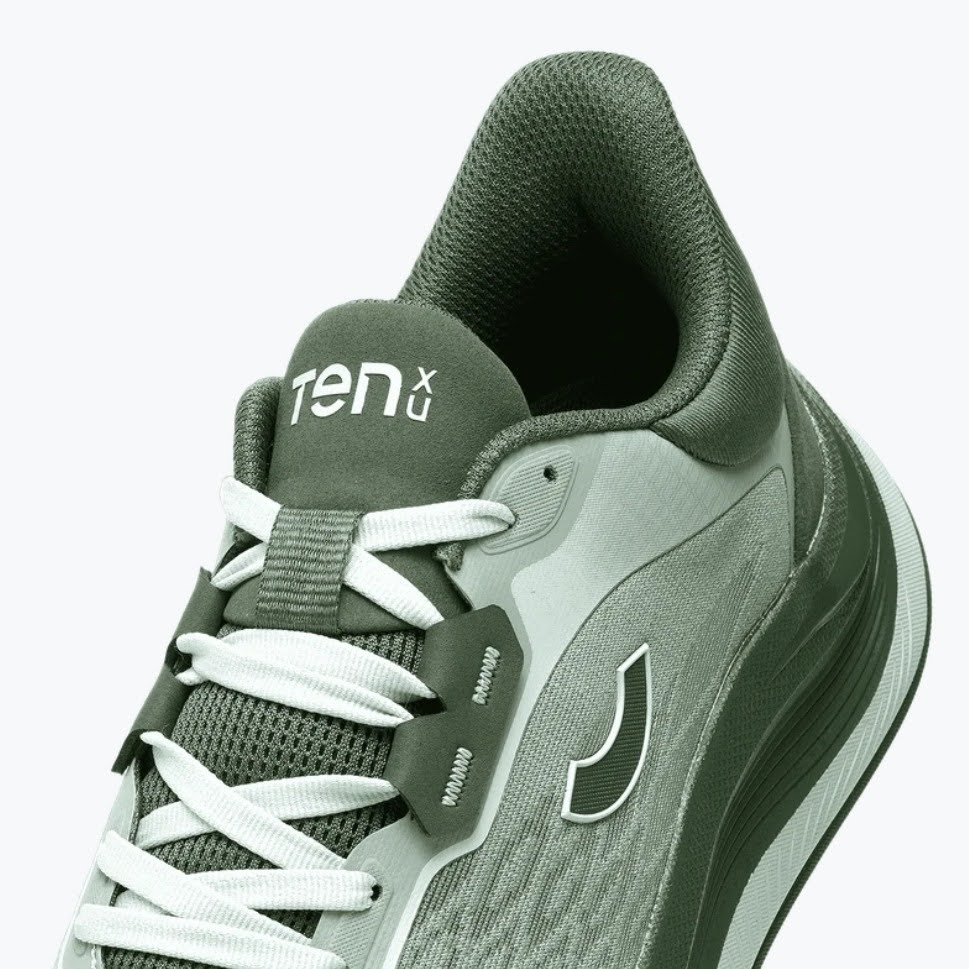
The Switch OG 2.0 uses Heelcloud EVA foam positioned under the heel to absorb micro-shocks during every heel strike. At just 360g, the foam keeps the shoe light without sacrificing impact protection.
When shopping, press your thumb into the midsole. If it compresses easily and recovers slowly, the foam will likely flatten faster under running impact.
2: Stack Height Above 30mm
Stack height is the total material thickness between your foot and the ground. A cushioned running shoe typically sits above 30mm at the heel. More height means more foam to absorb impact, but also less ground feel. The sweet spot for most runners is 35mm to 45mm at the heel, paired with a wide base for balance.
3: A Structured Insole, Not Just Padding
Most shoes ship with a thin, flat insole that adds minimal support. The best cushioned running shoes invest in insole engineering because the insole shapes how every step feels.
The Aeonic Recovery Trainer uses technology insoles built on the Contoura shape design, developed from over 120,000 3D foot scans. A deeper heel cup stabilizes your rearfoot on landing. Dynamic arch support distributes pressure through the full step cycle. And a Levation poured PU foam base holds its contour long after generic foam would have gone flat.
4: A Rubber Outsole Built for Indian Surfaces
The outsole touches the ground. A thin, stiff outsole cancels out the cushioning above it. A rubber outsole that flexes with your foot while resisting abrasion keeps the ride smooth.
The Aeonic uses a 3.5mm rubber outsole compounded for durability on abrasive Indian roads, providing reliable all-surface grip in both dry and monsoon conditions without adding stiffness.
Gear Up For Your Next Run


5: A Wide Toe-Box Made for Indian Feet
Your forefoot spreads on impact. A narrow toe box squeezes your toes together, creating pressure points and reducing stability. Most global running shoes use narrow lasts that don’t account for the wider morphology of Indian feet.
The Aeonic features a flared toe box that widens at the front, letting your forefoot splay naturally with every landing. Better spread means better balance and less bunion pressure over longer distances.
6: Dual-Density Construction
A single layer of foam can only do one thing well. Soft foam absorbs impact but compresses quickly. Firm foam holds its shape but feels harsh.
The best cushioned running shoes stack two densities. A softer layer handles landing shock. A firmer layer maintains shape and arch support. The Aeonic’s insole pairs a cushioning top layer with a Levation PU base that resists compression long after generic foam goes flat.
7: Energy Return, Not Just Absorption
A shoe that only absorbs energy makes your legs work harder to push off. The best cushioned shoes absorb impact on landing and return a portion of that energy into your next stride.
The Aeonic’s midsole balances protection with responsiveness. Landing forces get absorbed. Push-off gets assisted. Your movement stays fluid instead of heavy.
8: Ankle Stability Without Stiffness
Highly cushioned shoes sit higher off the ground, which can feel wobbly. A shoe with a wider base, supportive collar, and structured heel counter stays stable without restricting ankle movement.
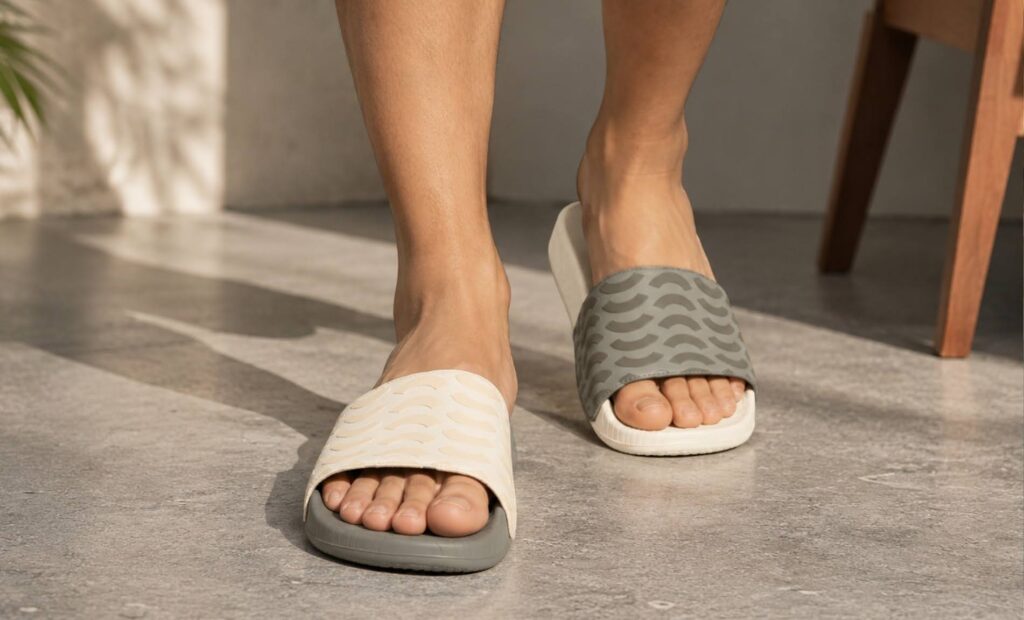
The Switch OG 2.0 addresses this with a 70mm collar height that wraps around your ankle, inbuilt arch support, and a full rubber stud outsole. For everyday wear, the Crossover Slip On embeds a TPU heel cup that locks your foot in place, proving stability and cushioning don’t need to be a trade-off.
Quick Reference: Cushioned Shoe Checklist
| Feature | What to Check |
| Midsole foam | High-grade EVA or EVA + PU layering |
| Stack height | Above 30mm heel for the cushioned category |
| Insole | Contoured arch support, deep heel cup |
| Outsole | Flexible rubber, 3mm+ thickness |
| Toe-box | Wide enough for natural forefoot spread |
| Construction | Dual-density (soft top + firm base) |
| Energy return | Midsole rebounds, not just absorbs |
| Stability | Wide base, collar support, heel lockdown |
Your Joints Keep Score, so Give Them the Right Shoe
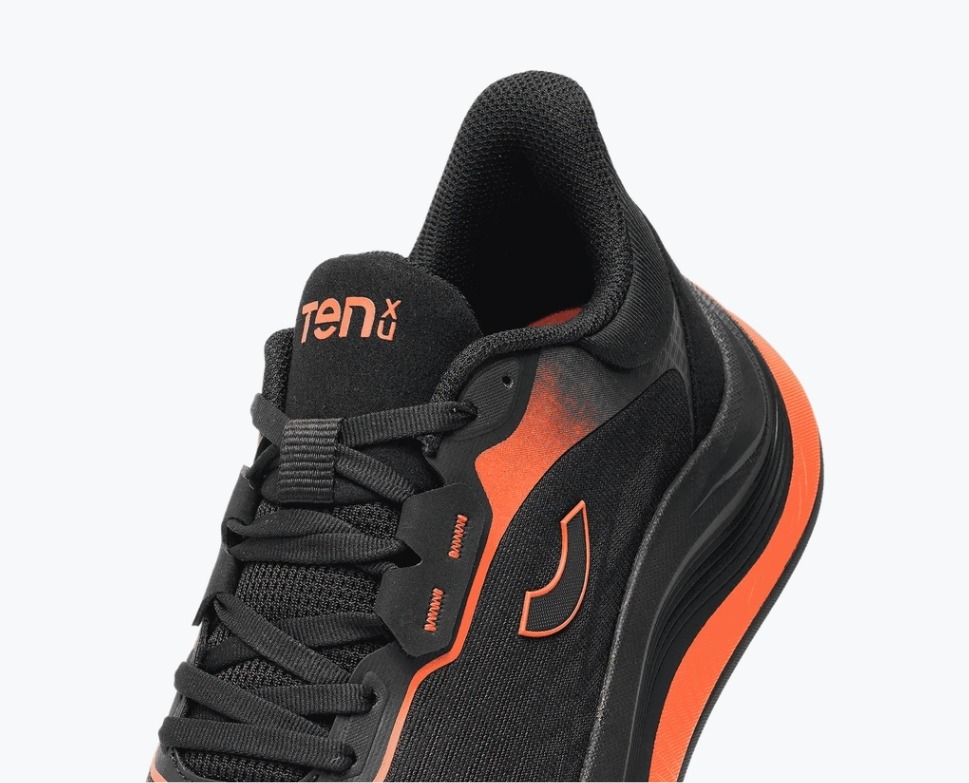
Every run adds up. Thousands of impacts per session, millions over a year. The cushioning under your feet decides how much of that your body absorbs versus the shoe.
Stop running in shoes that quit before you do. Life never stops, and play shouldn’t either. Never Stop Playing.
Lace up and find out. Check our products and feel the difference under your feet.
Frequently Asked Questions
Gear Up For Your Next Run