The best cricket shoes for kids are light, have rubber studs rather than metal spikes, and fit with about a thumb’s width of room at the toe. Most junior cricket in India is played on hard ground, matting and in nets, where rubber studs grip well. Check fit every few months, because young feet grow fast.
Kids pick up cricket fast, and their feet grow even faster. Choosing cricket shoes for kids is where many parents get stuck. The wrong pair can mean slips in the nets, blisters after coaching or shoes that are too small within a term.
The good news is that picking a pair follows a simple sequence. Know the surface, pick the right studs, measure the feet, check the weight, look at toe and heel protection, and plan for growth. Each step below builds on the last, so your young player can focus on the ball and not their feet.
Step 1: Know Where They Play
The surface is the ground your child plays on most. It comes first because it decides the type of sole they need.
A simple split:
- Gully and tennis-ball cricket: rubber studs on hard ground and concrete.
- Academy nets and coaching: rubber studs on matting and artificial turf.
- School and club matches on grass: rubber studs for most juniors. Spikes only for older players on proper turf.
Most junior cricket in India is played on hard ground, matting or in nets. Our guide to cricket shoes for turf explains how to match a sole to the pitch if your child also plays on grass.
Step 2: Pick Rubber Studs, Not Spikes
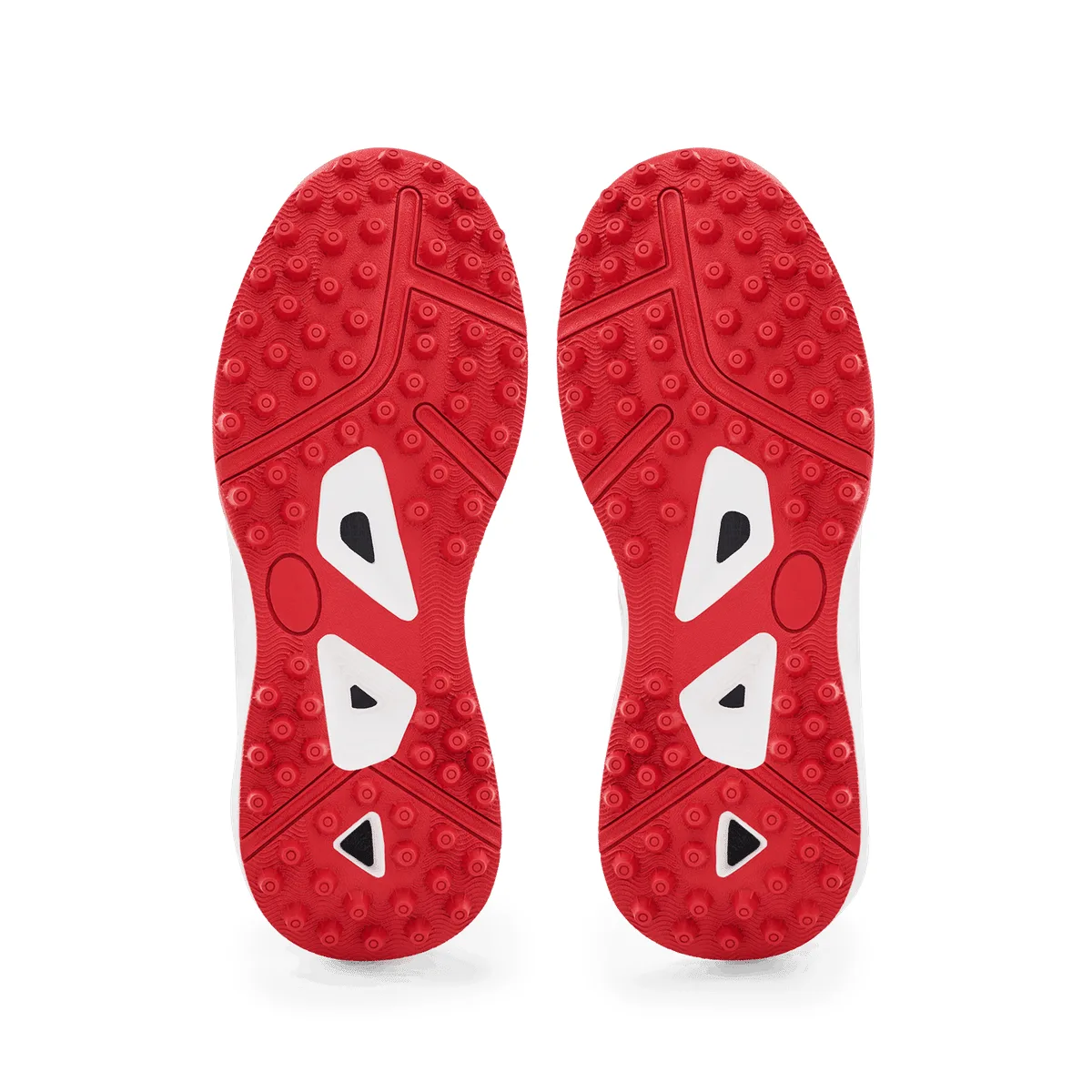
Rubber studs are moulded bumps on the sole that grip firm ground. Metal spikes are screw-in pins built for soft grass, and they are heavy and unsafe on hard surfaces.
Rubber studs suit young players because:
- They grip matting, hard ground and artificial turf.
- They are lighter, so small legs tire less.
- They are safer in crowded nets and on concrete.
Most coaches start juniors in rubber studs and move to spikes only when a player is bowling quick on turf. Ask your child’s coach if you are unsure.
Step 3: Measure Their Feet Properly
Measuring means checking the length of each foot at home before you buy. Kids rarely say a shoe is tight, so a quick measurement avoids guesswork.
Try this at home:
- Stand your child on a sheet of paper, heel against a wall.
- Mark the tip of the longest toe and measure from the wall in centimetres.
- Repeat for the other foot and use the longer one.
- Match the length to the brand’s size chart.
Measure in the evening, when feet are at their largest. Our guide to how to measure shoe size at home walks through each step.
Step 4: Check the Weight
Weight is how heavy each shoe feels on the foot. For a child, a heavy shoe slows running between the wickets and tires the legs during long sessions.
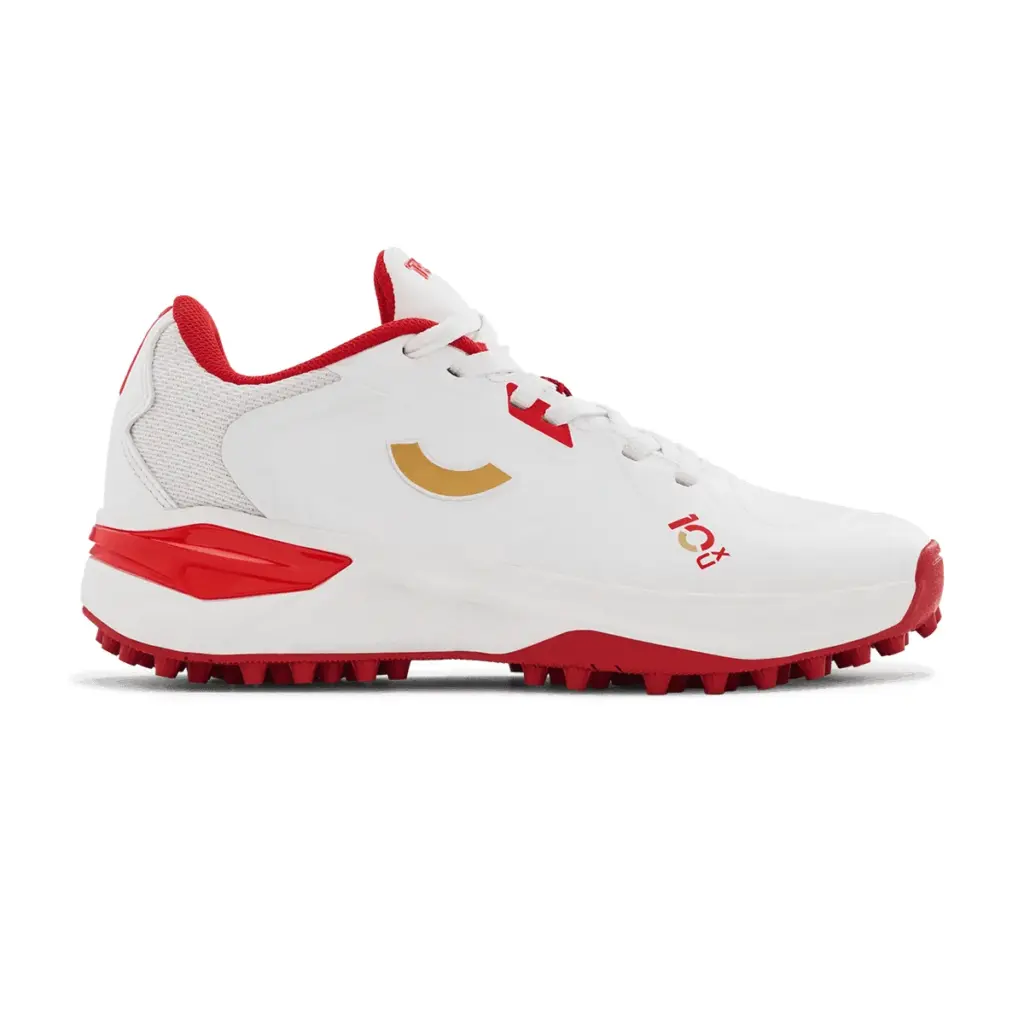
The Youngstar is built for this stage. The Youngstar Kids’ Cricket Shoes use a lightweight micro-PU upper that keeps young players quick on their feet. Deep, well-defined rubber studs give grip on hard ground and are built to last a season.
Pick up the shoe and compare it to their school shoes. If it feels much heavier, keep looking.
Step 5: Look for Toe and Heel Protection
Toe protection is a tougher front that resists knocks and scuffs. Heel protection is a firm cup or clip that holds the foot in place.
Watch for these features:
- A reinforced toe cap: protects against a dropped bat and stops the front tearing during quick stops.
- A firm heel cup or clip: holds the heel steady and helps the ankle on sharp turns.
- A padded collar: stops rubbing at the ankle on long coaching days.
Kids drag their feet and stop hard, so the toe often wears out first. Press the toe and heel. Both should feel firm, not floppy.
Step 6: Plan for Growth, Not Too Much
Growth room is the space left in front of the toes for growing feet. It matters because too little means a new pair in weeks, and too much means tripping and blisters.
Follow these fit rules:
- Leave about a thumb’s width, roughly 1 cm, beyond the longest toe.
- Do not buy two sizes up. Loose shoes slip and cause blisters.
- Try shoes with the thick sports socks your child plays in.
- Check the toes can spread without pressing the sides.
Indian feet are often wider across the forefoot than standard sizing allows, and kids’ feet are no different. Our guide to why wide toe box shoes matter for Indian feet explains why width matters.
Step 7: Know When to Size Up
Kids rarely say their shoes are tight until they hurt. Checking regularly saves sore feet and missed sessions.
Watch for these signs:
- Red marks on the toes or heels after play.
- The big toe touching the front when they stand.
- Your child curling their toes or limping after nets.
Check the fit every two to three months during a growth phase. If the studs are worn smooth before they outgrow the pair, replace them for grip.
Gully vs Academy vs Turf Shoes: Quick Comparison
A short reference to match your child’s cricket to the right shoe.
| Type | Best For | Key Feature |
|---|---|---|
| Gully shoes | Tennis-ball cricket on hard ground | Light build and rubber studs |
| Academy shoes | Nets and coaching on matting | Deeper studs, toe cap and heel support |
| Turf shoes | Older juniors bowling on grass | Spikes or half-spikes for soft ground |
The key point is to buy for the surface and the fit today, not a size they might grow into next year. Choose rubber studs, measure properly and check the fit often.
Start Their Cricket Right
Good shoes let young players focus on learning the game, not on sore feet. Getting the fit right early builds confidence on every run.
Ready to feel the difference for yourself? Check our cricket shoes and find a pair built for young players. Never Stop Playing. Start here.
Frequently Asked Questions
What cricket shoes should a beginner kid wear?
A beginner kid should wear light cricket shoes with rubber studs, a firm heel and a reinforced toe. Rubber studs grip hard ground, matting and nets, where most junior cricket is played. Avoid metal spikes until your child plays regularly on turf.
Do kids need spikes for cricket?
Most kids do not need spikes for cricket. Rubber studs grip well on hard ground, matting and artificial turf, and they are lighter and safer. Older juniors who bowl fast on grass turf can move to spikes on their coach’s advice.
How much room should kids’ cricket shoes have?
Kids’ cricket shoes should have about a thumb’s width, roughly 1 cm, beyond the longest toe. That leaves room to grow without the foot sliding around. Buying two sizes up causes slips and blisters, so stick to one size of growth room.
How often do kids need new cricket shoes?
Kids usually need new cricket shoes every six to twelve months, depending on how fast their feet grow. Check the fit every two to three months during a growth phase. Replace them sooner if the studs wear smooth or the toe splits.
Are cricket shoes for boys different from girls’ cricket shoes?
Cricket shoes for boys and girls are usually the same, because junior cricket shoes are made in unisex sizes. What matters is the length and width of the foot, not whether the player is a boy or a girl. Measure both feet and fit the longer one.
Can kids wear running shoes for cricket?
Kids can wear running shoes for casual gully cricket, but they are not ideal for regular coaching. Running shoes have flat soles that slip on matting and turf, and soft uppers that wear through when kids drag their feet. Cricket shoes with rubber studs grip better.