
Running more miles does not automatically make you faster. At some point, your body needs more power, not more volume. Strength training fills that gap by building the muscle force and stability that carry you through faster strides and longer races.
Research backs this up. Studies show that runners who add strength training improve time-trial performance by 3 to 5%. Sprinting speed improves by up to 3.4%. The gains come from better elastic energy use, stronger fast-twitch muscle fibres, and a more efficient nervous system. Here are five exercises that target the muscles runners need most, plus a simple plan for fitting them into your week.
Gear Up For Your Next Run


Why Strength Training Makes Runners Faster
Before jumping into the exercises, a quick look at why lifting helps you run. The connection is not obvious, but it is backed by solid evidence.
Strength training improves three things that directly affect running speed:
- Running economy: stronger muscles use less energy per stride, so you cover more ground with less effort.
- Power output: stronger legs produce more force on each push-off, which increases stride length and speed.
- Injury resilience: stronger connective tissue and balanced muscles reduce the risk of common running injuries like shin splints and IT band pain.
You do not need to become a bodybuilder. Functional, compound movements with moderate weight two to three times a week are enough to see real results within three to four weeks.
5 Strength Exercises to Run Faster
Each exercise below targets a key muscle group for running. Focus on form first, add weight gradually, and aim for three sets of eight to twelve reps unless noted otherwise.
1. Barbell or Goblet Squats
Squats build the quads, glutes, and core, the primary muscles that drive each stride. A strong squat base helps you maintain form late in a race when fatigue sets in.
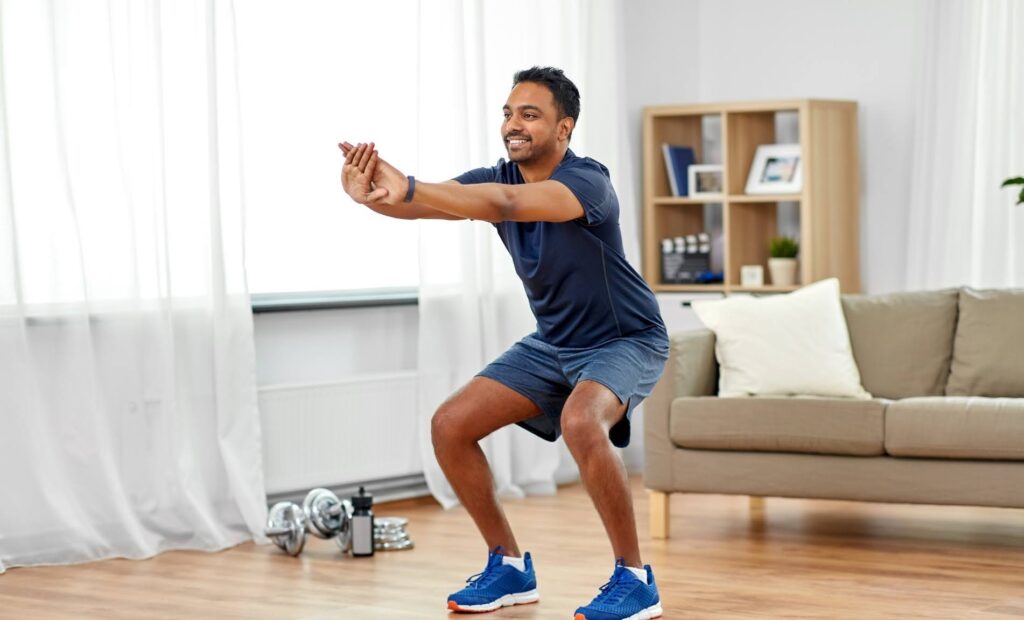
Stand with feet shoulder-width apart, lower your hips until your thighs are parallel to the floor, then drive through your heels to stand. Keep your chest up and your knees tracking over your toes.
2. Romanian Deadlifts
Romanian deadlifts target the hamstrings, glutes, and lower back, the muscles that power the pull phase of your stride. Strong hamstrings also protect the knee joint and reduce injury risk.
Hold a barbell or dumbbells at hip height. Hinge forward at the hips with a slight bend in your knees and lower until you feel a stretch in the hamstrings. Squeeze the glutes to stand. Keep the bar close to your legs throughout.
3. Walking Lunges
Walking lunges build single-leg strength, which directly mirrors the one-leg-at-a-time demand of running. Single-leg work also corrects imbalances between the left and right sides.
Step forward into a lunge, lower your back knee toward the ground, then push off the front foot to step into the next lunge. Keep your torso upright and your front knee over your ankle.
4. Box Jumps
Box jumps are a plyometric exercise that trains explosive power and fast-twitch muscle activation. The quick transition from landing to jumping teaches your legs to produce force rapidly, which improves your kick and sprint finish.
Stand facing a sturdy box, swing your arms, and jump onto the box, landing softly with both feet. Step back down and repeat. Start with a lower box and increase height as your power builds. Aim for three sets of five to eight reps.
5. Forearm Planks
A strong core keeps your torso stable and your posture upright, especially when fatigue tries to pull your shoulders forward. Core stability reduces energy wasted on side-to-side movement and helps you run straighter and more efficiently.
Lower onto your forearms and extend your legs into a plank position. Keep your body in a straight line from head to heels, engage your core, and hold. Aim for three sets of 30 to 60 seconds. For a more comprehensive look at recovery runs and how shoes support them, the brand’s guide explains the connection between footwear and post-workout recovery.
How to Fit Strength into Your Running Week
Adding strength work without burning out requires smart scheduling. The key is separating hard days and keeping strength sessions short.
A practical weekly split:
- Run easy or rest on strength days, so your legs are not fatigued from a hard run.
- Place strength sessions on two to three non-consecutive days.
- Keep each session to 30 to 40 minutes.
- Avoid heavy leg work the day before a long run or speed session.
A sample week might look like this:
- Monday: easy run
- Tuesday: strength
- Wednesday: tempo run
- Thursday: strength
- Friday: rest
- Saturday: long run
- Sunday: easy run or rest
For the right footwear on training days, the brand’s guide on choosing running shoes for durability covers what holds up across road and gym.
Stronger Legs, Faster Miles
Speed is not just about running harder. Stronger muscles, better economy, and more power on each push-off add up to faster times without extra mileage.
Ready to feel the difference for yourself? Browse our running shoes and running gear built for the runners who train to get faster. Never Stop Playing. Start here.